Last Updated: January 15, 2026
Why Japanese Names Explained Matters: The Power of a Name in Japanese Culture
In Japan, a name is never just a name. It’s a carefully composed message — a combination of characters, sounds, and meanings that parents spend weeks or months perfecting. Unlike Western naming traditions where names are often chosen for their sound or family history alone, Japanese names carry layers of meaning through their kanji characters, each stroke contributing to a deeper significance that reflects hopes, values, and aspirations for the child.
Having Japanese names explained properly means understanding that every Japanese name is a puzzle of three interconnected elements: the sound (how it’s pronounced), the characters (the kanji used to write it), and the meaning (what those characters signify). A single name like “Haruki” could be written with kanji meaning “spring” + “radiance” (陽輝), “clear” + “tree” (晴樹), or “distant” + “hope” (遥希) — each combination creating an entirely different name while sounding identical.
This guide draws from official Japanese naming surveys, historical records from the Jisho kanji dictionary, and cultural naming practices that have evolved over centuries. Whether you’re a writer creating authentic Japanese characters, a parent exploring naming options, a student of Japanese language and culture, or someone with Japanese heritage researching family names, this comprehensive guide has Japanese names explained in the depth they deserve.
The Structure of Japanese Names: Family Name First, Given Name Second
Before diving into specific names, understanding the structural foundation is essential for having Japanese names explained properly. Japanese naming order is the reverse of Western conventions — the family name (surname) comes first, followed by the given name. This reflects the collectivist cultural value that family and group identity precede individual identity.
Key Structural Facts About Japanese Names:
📜 Name Order
Family Name + Given Name. “Suzuki Haruto” — Suzuki is the family name, Haruto is the given name. In international contexts, some Japanese people reverse the order to match Western conventions, but the traditional order is increasingly maintained even in English publications. The Japanese government officially recommends the family-name-first order in all contexts.
👤 No Middle Names
Japanese names traditionally have no middle names. The structure is simply surname + given name. This differs from many Western naming conventions and can create administrative challenges when Japanese people interact with systems that require middle names. Some Japanese Christians or internationally-minded families may adopt middle names, but this is uncommon.
✍️ Kanji, Hiragana, or Katakana
Given names are typically written in kanji (Chinese characters adapted for Japanese), sometimes in hiragana (the cursive Japanese syllabary), or rarely in katakana (the angular syllabary used for foreign words). Surnames are almost always kanji. The choice of writing system carries meaning — hiragana names feel softer and more modern; kanji names feel traditional and carry explicit meanings.
📏 Character Limits
Japanese law restricts the kanji that can be used in names to the Jinmeiyō kanji (人名用漢字) list — approximately 2,999 characters approved for personal names. This list includes the 2,136 Jōyō kanji (daily-use characters) plus 863 additional characters specifically approved for names. Parents cannot legally use kanji outside this approved list for their children’s names.
Japanese Surnames: 100,000+ Family Names with Deep Historical Roots
Japan has over 100,000 distinct surnames — one of the most diverse surname systems in the world, largely because commoners were legally required to adopt family names only in the Meiji era (1868-1912). Before that, surnames were primarily reserved for samurai, nobility, and certain merchant families. When ordinary Japanese people suddenly needed surnames, they created them from geographical features, occupations, and natural elements — leading to the incredible diversity seen today.
Common Japanese Surname Categories:
| Category | Description | Examples | Kanji Meaning |
|---|---|---|---|
| Geographical Features | Based on mountains, rivers, fields, forests | Yamamoto (山本), Tanaka (田中), Kawamura (川村) | Mountain-base, Center of rice field, River village |
| Directional | Based on compass directions or relative position | Kitagawa (北川), Nishimura (西村), Minami (南) | North river, West village, South |
| Natural Elements | Trees, flowers, stones, water features | Matsumoto (松本), Ishikawa (石川), Sakurai (桜井) | Pine-base, Stone river, Cherry blossom well |
| Historical/Occupational | Ancient titles, professions, or clan names | Hattori (服部), Kaji (鍛冶), Takumi (匠) | Clothing guild, Blacksmith, Artisan |
Top 30 Most Common Japanese Surnames with Meanings:
🥇 Top 1-10
Satō (佐藤) — Help + Wisteria
Suzuki (鈴木) — Bell + Tree
Takahashi (高橋) — High + Bridge
Tanaka (田中) — Rice field + Middle
Watanabe (渡辺) — Cross + Border
Itō (伊藤) — That + Wisteria
Yamamoto (山本) — Mountain + Base
Nakamura (中村) — Middle + Village
Kobayashi (小林) — Small + Forest
Katō (加藤) — Add + Wisteria
🥈 Top 11-20
Yoshida (吉田) — Lucky + Rice field
Yamada (山田) — Mountain + Rice field
Sasaki (佐々木) — Help + Tree
Yamaguchi (山口) — Mountain + Mouth
Saitō (斎藤) — Purify + Wisteria
Matsumoto (松本) — Pine + Base
Inoue (井上) — Well + Above
Kimura (木村) — Tree + Village
Hayashi (林) — Forest
Shimizu (清水) — Clear + Water
🥉 Top 21-30
Yamazaki (山崎) — Mountain + Cape
Mori (森) — Forest
Abe (阿部) — Corner + Part
Ikeda (池田) — Pond + Rice field
Hashimoto (橋本) — Bridge + Base
Yamashita (山下) — Mountain + Below
Ishikawa (石川) — Stone + River
Nakajima (中島) — Middle + Island
Maeda (前田) — Front + Rice field
Fujita (藤田) — Wisteria + Rice field
Japanese Given Names: Kanji, Meanings, and Modern Trends
Japanese given names are where the art of naming truly shines. Unlike surnames, which are inherited, given names are carefully chosen by parents — and the process is deeply intentional. When having Japanese names explained, understanding how kanji selection works is essential. Parents consider multiple factors simultaneously: the meaning of the kanji, the number of strokes (which has superstitious significance in some families), how the name sounds, how it pairs with the family name, and whether the characters are auspicious.
How Japanese Parents Choose Given Names:
Select the Desired Sound First
Many parents start with the phonetic reading they want — “Haruto,” “Yui,” “Ren” — and then search for kanji combinations that produce that sound while carrying beautiful meanings. Sound symbolism matters: soft sounds (y, m, n, h) feel gentle; sharp sounds (k, t, r) feel strong.
Choose Kanji with Auspicious Meanings
Parents select characters associated with positive qualities: strength (強, 剛), beauty (美, 麗), wisdom (智, 賢), kindness (優, 恵), nature (花, 海, 空, 陽), or virtue (誠, 仁, 義). The kanji are literally a wish for the child’s future encoded in their name.
Check Stroke Count (Seimei Handan)
Some families consult seimei handan (姓名判断) — a form of fortune-telling based on the total number of strokes in the kanji of the full name. Certain stroke counts are considered lucky or unlucky. While not universally practiced, it remains influential enough that many parents at least check their chosen name’s stroke count.
Consider the Full Name Balance
The surname + given name combination should flow well when spoken and look balanced when written. Parents say the full name aloud multiple times, write it repeatedly, and consider how it will appear on official documents, business cards, and in daily life.
500+ Beautiful Japanese Names with Meanings
Japanese Boy Names (200+)
🌅 Popular Modern Boy Names
Haruto (陽翔) — Sun + Soar
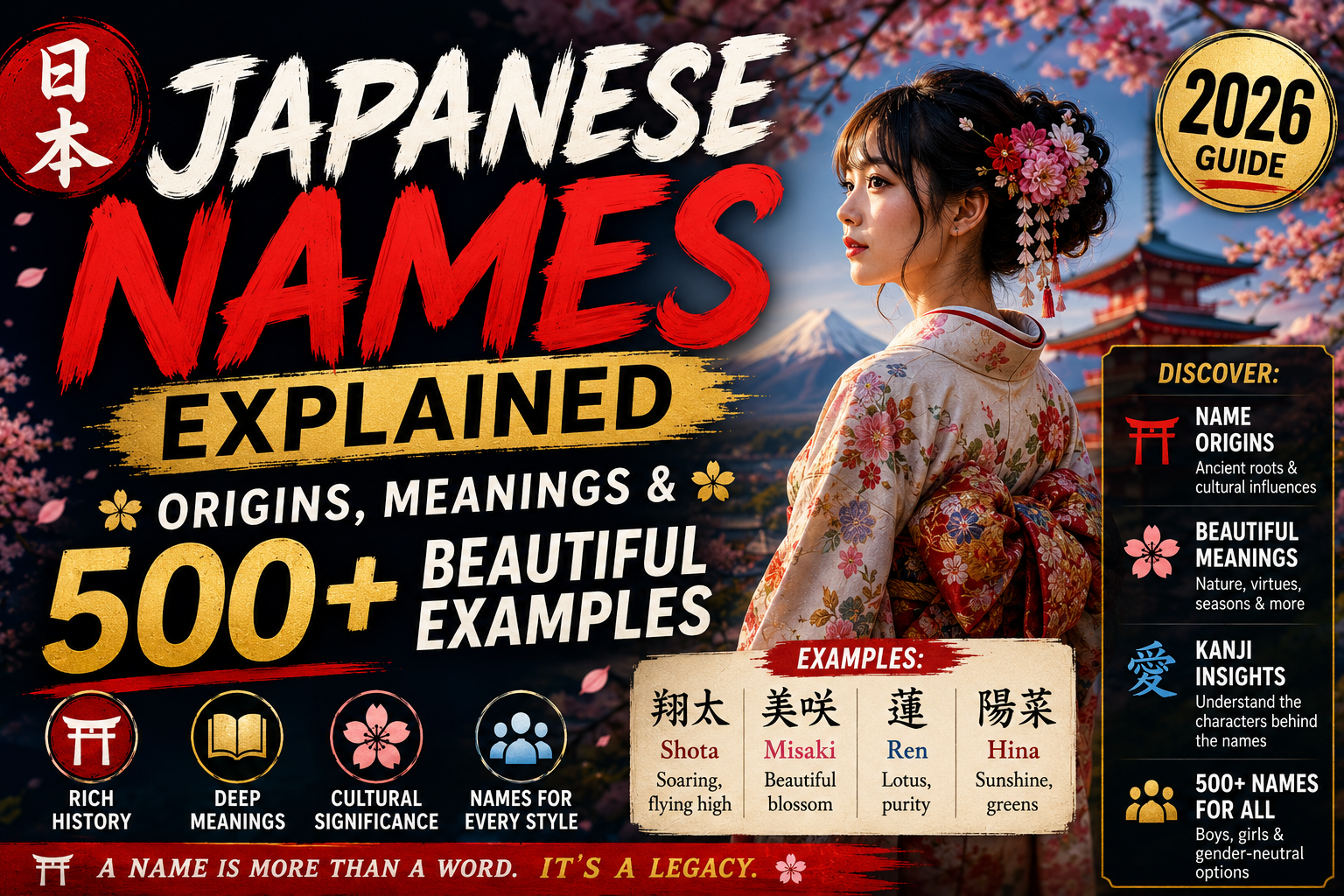
Ren (蓮) — Lotus
Yūma (悠真) — Distant + Truth
Minato (湊) — Harbor
Sōta (颯太) — Gale + Thick
Yūto (優斗) — Gentle + Constellation
Haruki (陽輝) — Sun + Radiance
Riku (陸) — Land
Itsuki (樹) — Tree
Asahi (朝陽) — Morning + Sun
💪 Strong & Powerful Boy Names
Takeshi (武) — Warrior
Kenji (健二) — Healthy + Second
Ryū (竜) — Dragon
Isamu (勇) — Courage
Gō (剛) — Strength
Tatsuya (竜也) — Dragon + To be
Shō (翔) — Soar
Kenta (健太) — Healthy + Thick
Daiki (大輝) — Great + Radiance
Masaru (勝) — Victory
🍃 Nature-Inspired Boy Names
Hayate (颯) — Gale
Sora (空) — Sky
Kai (海) — Sea
Rin (凛) — Dignified
Taiga (大河) — Great River
Yamato (大和) — Great Harmony
Fūma (風真) — Wind + Truth
Tsubasa (翼) — Wings
Arashi (嵐) — Storm
Hikaru (光) — Light
Japanese Girl Names (200+)
🌸 Popular Modern Girl Names
Yui (結衣) — Tie + Garment
Mei (芽依) — Bud + Rely
Aoi (葵) — Hollyhock
Yua (結愛) — Tie + Love
Sakura (桜) — Cherry Blossom
Rin (凛) — Dignified
Himari (陽葵) — Sun + Hollyhock
Yuna (優菜) — Gentle + Vegetable
Miu (美羽) — Beauty + Feather
Hina (陽菜) — Sun + Greens
🌺 Beautiful & Elegant Girl Names
Akari (明里) — Bright + Village
Miyu (美優) — Beauty + Gentle
Kaede (楓) — Maple
Nanami (七海) — Seven + Seas
Riko (莉子) — Jasmine + Child
Ayane (彩音) — Color + Sound
Misaki (美咲) — Beauty + Blossom
Yumeko (夢子) — Dream + Child
Reina (怜奈) — Wise + Apple Tree
Sayuri (小百合) — Small + Lily
🌙 Nature & Season Girl Names
Haruka (遥香) — Distant + Fragrance
Natsuki (夏希) — Summer + Hope
Akiko (秋子) — Autumn + Child
Fuyumi (冬美) — Winter + Beauty
Yuki (雪) — Snow
Hana (花) — Flower
Tsukiko (月子) — Moon + Child
Asami (麻美) — Hemp + Beauty
Mizuki (瑞希) — Auspicious + Hope
Kohana (小花) — Small + Flower
Gender-Neutral Japanese Names (50+)
Japanese has a growing category of gender-neutral names (中性的な名前 – chūseiteki na namae) that work beautifully for any gender. These names often draw from nature, abstract concepts, or use phonetic patterns that aren’t strongly associated with either gender. They’re increasingly popular in modern Japan and are excellent choices for fictional characters, creative projects, or parents seeking flexible naming options.
🌊 Nature-Inspired Unisex
Akira (明/亮) — Bright
Kaoru (薫) — Fragrance
Hikaru (光) — Light
Makoto (誠) — Sincerity
Sora (空) — Sky
Ren (蓮) — Lotus
Nao (直) — Honest
Aoi (葵) — Hollyhock
Yuki (幸/雪) — Happiness/Snow
Haru (陽/春) — Sun/Spring
💫 Abstract & Virtue Unisex
Shinobu (忍) — Endurance
Jun (純) — Pure
Izumi (泉) — Spring/Fountain
Kanon (花音) — Flower + Sound
Hinata (日向) — Sunny Place
Subaru (昴) — Pleiades (star cluster)
Asuka (明日香) — Tomorrow + Fragrance
Ryo (涼) — Refreshing
Shizuka (静) — Quiet
Michiru (満) — Fulfillment
🎨 Modern Unisex Choices
Nagi (凪) — Calm
Itsuki (樹) — Tree
Minori (実) — Fruit/Bear Fruit
Tsubasa (翼) — Wings
Yuzuki (結月) — Tie + Moon
Hajime (始) — Beginning
Rui (瑠衣) — Lapis Lazuli + Garment
Towa (永遠) — Eternity
Asahi (朝陽) — Morning Sun
Nozomi (望) — Hope/Wish
Historical & Traditional Japanese Names (50+)
These names carry the weight of Japanese history — samurai, poets, emperors, and legendary figures. They’re less common for modern children but are invaluable for historical fiction, period dramas, traditional character creation, and understanding the depth of Japanese naming traditions. Many of these names follow older phonetic patterns that sound distinctly “classical” to Japanese ears.
⚔️ Samurai-Era Male Names
Nobunaga (信長) — Trust + Long
Hideyoshi (秀吉) — Excellent + Lucky
Ieyasu (家康) — Home + Peace
Musashi (武蔵) — Warrior + Store
Yoshitsune (義経) — Righteous + Manage
Kenshin (謙信) — Modest + Trust
Shingen (信玄) — Trust + Mysterious
Mitsuhide (光秀) — Light + Excellent
Yukimura (幸村) — Fortune + Village
Masamune (正宗) — Correct + Religion
👘 Classical Female Names
Murasaki (紫) — Purple
Sei Shōnagon (清少納言) — Pure + Junior Counselor
Tomoe (巴) — Comma (symbol)
Oichi (お市) — Honorable Market
Chiyo (千代) — Thousand Generations
Okuni (阿国) — Corner + Country
Kasuga (春日) — Spring Day
Yodo-dono (淀殿) — Eddy + Lord
Hosokawa Gracia (細川ガラシャ) — Samurai convert
Nōhime (濃姫) — Rich + Princess
📜 Literary & Artistic Names
Bashō (芭蕉) — Banana Plant (poet)
Hokusai (北斎) — North + Studio
Hiroshige (広重) — Wide + Heavy
Utamaro (歌麿) — Song + Round
Sōseki (漱石) — Gargle + Stone
Ōgai (鴎外) — Seagull + Outside
Akutagawa (芥川) — Mustard + River
Mishima (三島) — Three + Island
Kawabata (川端) — River + Edge
Tanizaki (谷崎) — Valley + Cape
The Kanji System: Understanding How Japanese Names Carry Meaning
No guide to Japanese names explained would be complete without a deeper look at the kanji system. Kanji are logographic characters borrowed from Chinese, each carrying inherent meaning. A single kanji can have multiple readings — the on’yomi (Chinese-derived pronunciation) and kun’yomi (native Japanese pronunciation) — which is why the same character can be read differently in different names.
Common Kanji in Japanese Names and Their Meanings:
| Kanji | Readings (Name Use) | Meaning | Example Names |
|---|---|---|---|
| 美 | Mi, Bi, Yoshi | Beauty, beautiful | Misaki (美咲), Emi (恵美), Yoshimi (佳美) |
| 太 | Ta, Tai, Futo | Thick, great, abundant | Yūta (勇太), Kenta (健太), Sōta (颯太) |
| 花 | Hana, Ka, Ke | Flower | Hana (花), Hanako (花子), Kaho (花歩) |
| 陽 | Haru, Hi, Yō, Aki | Sun, sunlight, positive | Haruto (陽翔), Haruka (陽香), Asahi (朝陽) |
| 優 | Yū, Yasu, Masa | Gentleness, superiority, actor | Yūto (優斗), Yūki (優希), Yūma (優真) |
| 子 | Ko, Shi, Ne | Child (traditional female suffix) | Keiko (恵子), Akiko (秋子), Yumiko (由美子) |
| 大 | Dai, Tai, Hiro, Ō | Large, great, big | Daiki (大輝), Daisuke (大輔), Hiroshi (大志) |
| 翔 | Shō, Kakeru, To | Soar, fly, glide | Shōta (翔太), Haruto (陽翔), Tsubasa (翼) |
| 愛 | Ai, Mana, E, Ito | Love, affection | Aiko (愛子), Mana (愛), Yua (結愛) |
| 希 | Ki, Ke, Mare, Nozo | Hope, rare, wish | Yūki (優希), Nozomi (望), Kazuki (一希) |
Japanese Naming Trends and Modern Changes
Japanese naming practices continue to evolve, reflecting broader social changes. Understanding these trends is essential for having Japanese names explained in their contemporary context. The names popular in 1950 are very different from those popular in 2025, and the cultural forces shaping these changes tell a fascinating story about Japanese society.
Key Trends in Modern Japanese Naming:
📉 Decline of the -ko (子) Suffix
The suffix -ko (子, meaning “child”) dominated female names for much of the 20th century — names like Keiko, Akiko, Yumiko, Sachiko. Today, it’s dramatically less common. Modern parents prefer names ending in -ka (花, flower), -na (菜, greens), -ri (莉, jasmine), or vowel sounds that feel softer and less traditional. The shift reflects changing gender norms and aesthetic preferences.
🌟 Kirakira Names
Kirakira nēmu (キラキラネーム, “sparkling names”) are unconventional names with unusual kanji readings or creative character combinations. They’re controversial in Japan — some see them as creative self-expression, others as burdensome for the children who bear them. Examples include names where the kanji and pronunciation have no traditional connection, or names inspired by anime and manga characters.
🌍 International-Friendly Names
Increasing numbers of Japanese parents choose names that work in multiple languages — names like Ken, Naomi, Hana, Rei, and Kai that are pronounceable and unproblematic in English and other languages. This reflects Japan’s growing internationalization and the practical awareness that children may study or work abroad.
📊 Ranking-Driven Choices
Annual baby name rankings published by organizations like Meiji Yasuda Life Insurance heavily influence naming trends. The most popular names — currently Haruto, Ren, and Yūma for boys; Yui, Mei, and Aoi for girls — dominate hospital nurseries. Some parents embrace the rankings; others deliberately avoid top-10 names to ensure their child’s name is distinctive.