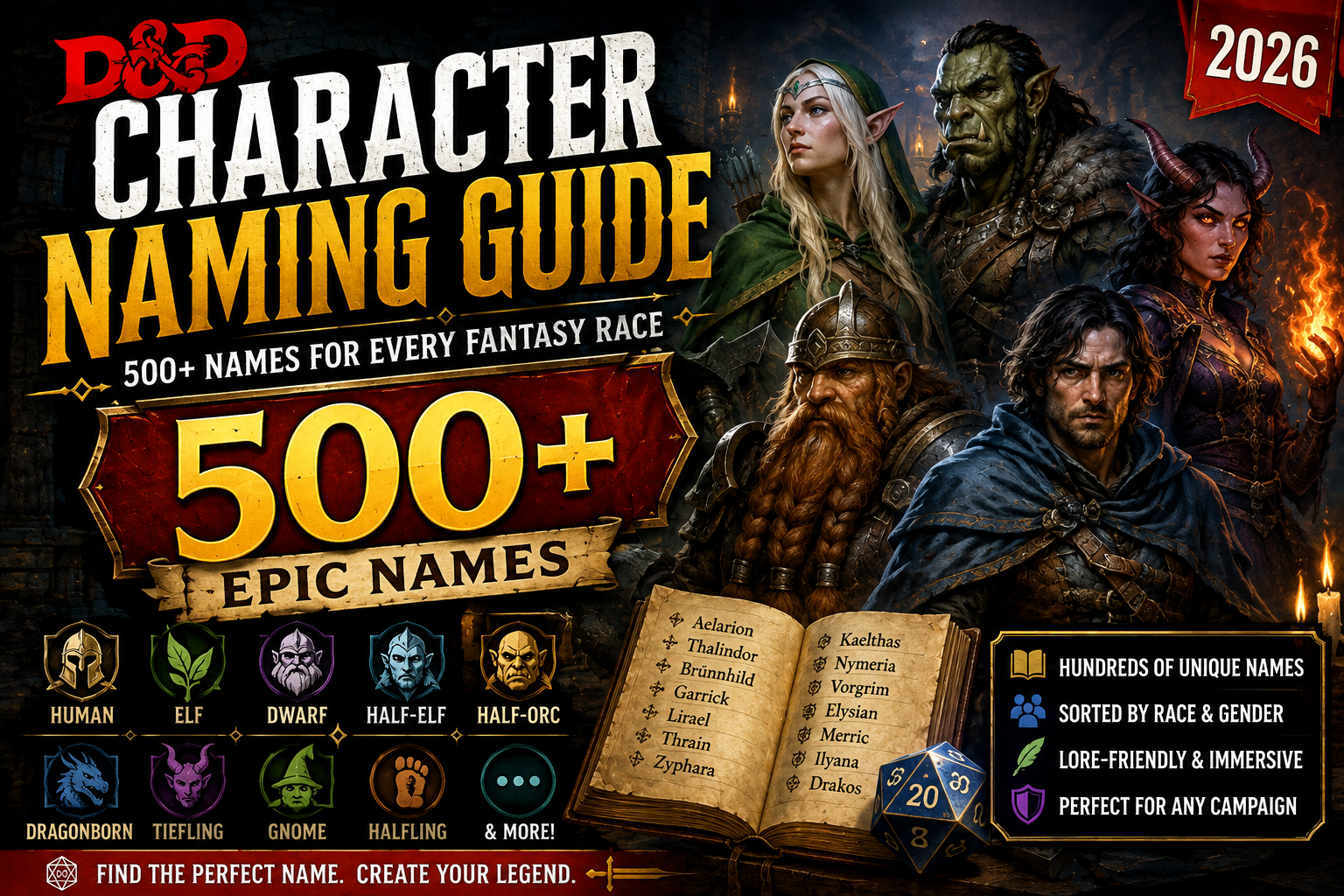
📌 In This D&D Character Naming Guide: Master the art of naming D&D characters with 500+ names across every playable race, detailed naming conventions from official D&D lore, phonetic patterns for each ancestry, a free AI-powered D&D name generator, and tips to create names your party will remember. Whether you’re a player rolling up a new character or a DM building a world, this guide has everything you need.
Why a D&D Character Naming Guide Matters for Players and DMs
Your character’s name is the first thing your party hears. Before they see your character sheet. Before they know your class or backstory. Before you roll a single die — there’s the name. In Dungeons & Dragons, names don’t just identify characters. They establish race, hint at backstory, suggest personality, and anchor your character in the world. A well-chosen name makes your character feel real. A poorly chosen one breaks immersion for everyone at the table.
This D&D character naming guide is built for both players creating their next hero and Dungeon Masters populating entire worlds. It covers naming conventions for every major playable race, provides 500+ ready-to-use names, explains the phonetic patterns that make names feel authentically elven, dwarvish, draconic, or tiefling, and connects you to tools that generate infinite naming possibilities.
Drawing from official D&D sourcebooks including the Player’s Handbook, Xanathar’s Guide to Everything, and Mordenkainen Presents: Monsters of the Multiverse, this guide provides lore-accurate naming frameworks while encouraging the creativity that makes D&D special.
Core Principles of D&D Character Naming
Before diving into race-specific conventions, let’s establish the foundational principles that apply across all D&D naming. These are the rules that separate immersive, world-building names from names that pull players out of the fantasy:
🧝 Phonetic Consistency Within Races
Every race in D&D has a distinct phonetic palette. Elven names flow with vowels and liquid consonants (l, r, m, n, th). Dwarven names use hard consonants and short syllables (k, g, d, t, r). Draconic names are long, sibilant, and majestic. When names from the same culture share phonetic DNA, the world feels coherent.
📜 Lore-Appropriate Structure
Official D&D sourcebooks establish naming structures for each race. Dragonborn have clan names. Tieflings often choose virtue names. Elves have childhood names and adult names. Following these structures makes your character feel like they belong in the Forgotten Realms (or your homebrew world).
🎭 Personality Reflection
A name can telegraph character traits before you speak a word of dialogue. Sharp, short names suggest a brusque, practical personality. Long, flowing names suggest nobility, magic, or ancient lineage. Harsh, guttural names suggest a rough background or fierce temperament.
🗣 Pronounceability at the Table
Your DM and fellow players need to say your character’s name — often. If it takes three tries to pronounce “Xy’larthrianix,” expect to be called “X” by session two. The best D&D names are distinctive but pronounceable. Save the truly complex names for ancient dragons and forgotten gods that NPCs reference, not the character everyone addresses every round of combat.
D&D Character Naming Guide: Names for Every Race
Elf Names (High Elves, Wood Elves, Drow, Eladrin)
Elven names are melodic, flowing, and rich with vowels. They often include soft consonants and feel lyrical when spoken aloud. Elves in D&D lore typically receive a childhood name (shorter, more casual) and an adult name (longer, more formal) upon reaching maturity. Many elves also have family names that reference natural features, celestial bodies, or ancient elven houses.
Elven Naming Conventions from D&D Lore:
- Phonetic palette: Vowels (a, e, i, o), liquid consonants (l, r, m, n), soft fricatives (th, s, f, v). Avoid harsh stops (k, g, t, d) as primary sounds.
- Common prefixes: Ael-, Aer-, El-, Gal-, Ila-, Lael-, Thal-, Vaer-, Xael-
- Common suffixes: -iel, -ion, -wyn, -riel, -thas, -dil, -las, -nor, -reth, -wynn
- Family names: Often nature-themed — Silverleaf, Moonbrook, Starweaver, Dawnshadow, Oakheart, Nightbreeze
🌙 High Elf Names (Male)
Aelindor, Thalorien, Vaeril, Galathil, Aerendir, Laethan, Iliphar, Xaeron, Eldoril, Thaendil, Arannis, Felaern, Mindartis, Oloric, Quaelon
🌟 High Elf Names (Female)
Aelindra, Thalia, Galadriel, Ilarae, Aerithys, Laerune, Vaenara, Xaelara, Elowyn, Thaeriel, Arwenna, Faelivrin, Meriel, Naevys, Quelanna
🍃 Wood Elf Names
Thornbark, Mosswhisper, Fernrunner, Oakenshade, Riverstone, Swiftarrow, Dawnwalker, Forestmist, Briarthorn, Wolftracker, Silentbranch, Greenmantle, Hawthorn, Rowanbough, Leafshade
🕷️ Drow Names (Male)
Drizzt, Zaknafein, Jarlaxle, Nalfein, Rizzen, Dinin, Kelnozz, Pharaun, Valas, Ryld, Gromph, Berg’inyon, Malaggar, Nimor, Quenthel
🕸️ Drow Names (Female)
Lolth, Eclavdra, Vierna, Briza, Malice, Shi’nayne, Halisstra, Danifae, Yvonnel, Zarithra, Ilvara, Miz’ri, Triel, Ssapriina, Viconia
✨ Eladrin Names
Auroral, Caelum, Dawnmist, Emberglow, Frostveil, Glimmershade, Iridian, Luminesca, Nebulora, Opalesce, Prismara, Shimmersky, Stardancer, Twilight, Vesperine
Dwarf Names (Hill Dwarves, Mountain Dwarves, Duergar)
Dwarven names are sturdy, consonant-heavy, and typically short — like the dwarves themselves. They favor hard sounds that feel carved from stone. Dwarves in D&D lore place immense value on clan and ancestry, so family names and clan affiliations are central to their identity. A dwarf introduced without their clan name is only half-introduced.
Dwarven Naming Conventions from D&D Lore:
- Phonetic palette: Hard consonants (k, g, d, t, b, r), short vowels, minimal sibilance. Avoid long flowing sounds.
- Common prefixes: Thor-, Dur-, Bal-, Gim-, Far-, Mor-, Bor-, Dar-, Gar-, Kil-
- Common suffixes: -in, -im, -or, -ak, -uk, -ar, -en, -ok, -ir, -an
- Clan names: Often reference crafting, stone, or ancestors — Battlehammer, Ironforge, Stonebrow, Copperkettle, Deepdelver, Anvilshield, Goldfinder, Rockseeker
⛏️ Hill Dwarf Names (Male)
Thorin, Durin, Balin, Gimli, Farin, Morin, Borin, Darin, Garin, Kilin, Nori, Dori, Ori, Fili, Kili, Gloin, Oin, Bifur, Bofur, Bombur
🏔️ Mountain Dwarf Names (Male)
Thorgrim, Durak, Balgor, Gimdal, Farak, Mordek, Borak, Darok, Garum, Kilgar, Thoradin, Durgeddin, Balund, Gimrek, Mordak
💎 Dwarf Names (Female)
Thora, Durga, Balma, Gimla, Fara, Morna, Bora, Dara, Garna, Kilma, Nora, Dagna, Helga, Ingrid, Sigrid, Brynja, Freya, Astrid, Runa, Thyra
🛡️ Dwarf Clan Names
Battlehammer, Ironforge, Stonebrow, Copperkettle, Deepdelver, Anvilshield, Goldfinder, Rockseeker, Grimaxe, Thunderbrew, Bronzebeard, Darkiron
⚒️ Duergar Names (Male)
Durth, Grack, Karg, Murk, Rorg, Thuld, Ulgak, Vorg, Zark, Brund, Draeg, Graul, Krund, Morag, Thuldr
🖤 Duergar Names (Female)
Durga, Gracka, Karga, Murka, Rorga, Thulda, Ulgra, Vorga, Zarka, Brunda, Draega, Graula, Krunda, Moraga, Thuldra
Tiefling Names
Tieflings are perhaps the most narratively rich race to name in D&D. With their infernal heritage and complex relationship with identity, tiefling names often reflect a choice: embrace the dark legacy with an infernal name, or assert independence with a virtue name. This duality makes tiefling naming deeply personal and character-revealing.
Tiefling Naming Conventions from D&D Lore:
- Virtue names: Many tieflings choose names representing ideals they strive for — Hope, Justice, Mercy, Creed, Valor, Destiny, Freedom, Truth, Harmony, Courage
- Infernal names: Those who embrace their heritage use names with harsh sounds, guttural consonants, and a distinctly otherworldly feel — often drawn from the Infernal language
- Phonetic palette (Infernal): Harsh fricatives (z, k, r), guttural sounds, long vowels for menace. Names often sound threatening or arcane.
- No family names: Tieflings typically don’t have clan structures or family names — their naming is individualistic, reflecting their often-isolated place in society
✨ Virtue Names
Hope, Justice, Mercy, Creed, Valor, Destiny, Freedom, Truth, Harmony, Courage, Honor, Peace, Grace, Faith, Charity, Patience, Temperance, Prudence, Reverie, Solace
🔥 Infernal Names (Male)
Akmenos, Amnon, Barakas, Damakos, Ekemon, Haroun, Iracles, Kairon, Leucis, Makaria, Melech, Morthos, Pelaios, Skamos, Therai, Zakarias, Zarios, Mordai, Kael, Voren
👿 Infernal Names (Female)
Akta, Bryseis, Celaeno, Damaia, Ea, Fierna, Iados, Kallista, Lerissa, Makaria, Nemeia, Orianna, Phelaia, Rieta, Sanneth, Thalestris, Vaneria, Zephyra, Lilith, Xaraya
Dragonborn Names
Dragonborn names reflect their draconic ancestry and deep commitment to clan. In official D&D lore, dragonborn personal names are given at birth, but their clan name carries the weight of generations. Honor, reputation, and the deeds of ancestors are embedded in every dragonborn introduction.
Dragonborn Naming Conventions from D&D Lore:
- Structure: Given name + Clan name. Both are equally important. A dragonborn who loses their clan name has lost their identity.
- Phonetic palette: Long, sibilant, majestic. Dragonborn names sound powerful when spoken. They often include hissing sounds (s, sh, th), hard consonants (k, g, d), and rolling r’s.
- Clan names: Often reference draconic traits, elements, or ancient deeds — Daardendrian, Kanjentellequor, Kerendan, Linxakasendalor, Ophinshtalajiir
- Draconic language influence: Names draw from the Draconic language — harsh, sibilant, and commanding
🐉 Dragonborn Names (Male)
Arjhan, Balasar, Bharash, Donaar, Ghesh, Heskan, Kriv, Medrash, Mehen, Nadarr, Pandjed, Patrin, Rhogar, Shamash, Shedinn, Tarhun, Torinn, Uther, Vrondiss, Zedaar
🐲 Dragonborn Names (Female)
Akra, Biri, Daar, Farideh, Harann, Havilar, Jheri, Kava, Korinn, Mishann, Nala, Perra, Raiann, Sora, Surina, Thava, Uadjit, Vrondara, Zofra, Krishka
🏰 Dragonborn Clan Names
Clethtinthiallor, Daardendrian, Delmirev, Drachedandion, Fenkenkabradon, Kepeshkmolik, Kerrhylon, Kimbatuul, Linxakasendalor, Myastan, Nemmonis, Norixius, Ophinshtalajiir, Prexijandilin, Shestendeliath, Turnuroth, Verthisathurgiesh, Yarjerit, Zenthyrios, Kerendan
Gnome Names (Forest Gnomes, Rock Gnomes, Deep Gnomes)
Gnome names are whimsical, playful, and often lengthy. Gnomes in D&D lore are enthusiastic collectors of names — it’s not unusual for a gnome to have a half-dozen names acquired from various adventures, achievements, and embarrassing stories. Naming is a form of storytelling in gnomish culture.
Gnome Naming Conventions from D&D Lore:
- Phonetic palette: Playful consonants (b, p, n, m), bright vowels, repetitive syllables. Names sound cheerful, curious, and slightly mischievous.
- Nickname culture: Gnomes accumulate nicknames throughout their lives. Each name tells a story. “Frug the Washed” might have gotten that name from a failed alchemy experiment involving soap.
- Common patterns: Repetitive syllables, rhyming components, and names that sound like they could be verbs or sounds — Bimpnottin, Frug, Gimble, Nackle, Pock
🍄 Forest Gnome Names (Male)
Bimpnottin, Boddyknock, Dimble, Eldon, Erky, Frug, Garret, Gimble, Glim, Jebeddo, Kellen, Namfoodle, Orryn, Roondar, Seebo, Sindri, Timbel, Wrenn, Zook, Gimwick
🔧 Rock Gnome Names (Male)
Alston, Brocc, Burgell, Cockaby, Daergel, Eldon, Fabric, Fonkin, Frug, Gimble, Glim, Grob, Jabby, Namfoodle, Orryn, Pock, Roondar, Seebo, Sindri, Warryn
🌸 Gnome Names (Female)
Bimpnottin, Breena, Caramip, Carlin, Donella, Duvamil, Ella, Ellyjobell, Ellywick, Enidda, Lilli, Loopmottin, Lorilla, Mardnab, Nissa, Nyx, Oda, Orla, Roywyn, Shamil, Tana, Waywocket, Zanna, Zinna
🕳️ Deep Gnome / Svirfneblin Names (Male)
Belwar, Brickers, Brund, Dirk, Duerin, Frung, Furin, Garlen, Grath, Grum, Helmut, Kelm, Knor, Korin, Kreel, Sorn, Thurn, Torr, Ulvin, Werg
💎 Svirfneblin Names (Female)
Briza, Diera, Duela, Frinna, Garla, Greena, Kelma, Krinna, Lurda, Murna, Orna, Rilga, Sorna, Tarna, Urga, Velda, Vorna, Werna, Xarna, Zilna
📚 Gnome Nicknames
Frug the Washed, Gimble the Curious, Nackle the Unburned, Tink the Overprepared, Wizzle the Once-Flattened, Boggle the Unsurprised, Twiddle the Twice-Lost, Quibble the Cautious
Halfling Names
Halfling names reflect their culture of comfort, community, and simple pleasures. Unlike the grand, ancient names of elves or the clan-honoring names of dwarves, halfling names are warm, approachable, and often sound like someone you’d want to share a meal with. In official D&D lore, halflings value family, hearth, and home — and their names reflect these priorities.
Halfling Naming Conventions from D&D Lore:
- Phonetic palette: Soft consonants, warm vowels, familiar sounds. Names feel cozy and approachable — like someone from a peaceful village.
- Given names: Often short, simple, and friendly. Easy to remember. Easy to say with a smile.
- Family names: Often reference nature, food, comfort, or simple occupations — Goodbarrel, Greenbottle, Highhill, Hilltopple, Leagallow, Tealeaf, Thorngage, Tosscobble, Underbough, Proudfoot
🌿 Halfling Names (Male)
Alton, Ander, Bernie, Bobbin, Cade, Callum, Corrin, Dannad, Eldon, Errich, Finnan, Garret, Habib, Kip, Lyle, Merrick, Milo, Odo, Osborn, Perrin, Quinn, Reed, Roscoe, Sam, Wellby
🏡 Halfling Names (Female)
Andry, Bree, Callie, Cora, Danniel, Euphemia, Jillian, Kithri, Lavinia, Lidda, Maegan, Merla, Myrtle, Nedda, Nikki, Nora, Olivia, Pippa, Rosalind, Seraphina, Shaena, Trym, Vani, Verna, Wilhelmina
🍞 Halfling Family Names
Goodbarrel, Greenbottle, Highhill, Hilltopple, Leagallow, Tealeaf, Thorngage, Tosscobble, Underbough, Proudfoot, Bramblefoot, Butterbur, Hayward, Lightfoot, Meadowlark, Quickstep, Silverspoon, Thistlewood
Half-Orc Names
Half-orc names reflect the tension between two heritages. Orcish names are harsh, guttural, and aggressive — reflecting a culture that values strength and dominance. Human names are varied and familiar. Half-orcs often navigate between these naming traditions, sometimes adopting an orcish name to assert identity, sometimes choosing a human name to fit in, and sometimes creating something that bridges both worlds.
Half-Orc Naming Conventions from D&D Lore:
- Orcish phonetic palette: Guttural sounds (g, k, r, kh), harsh stops, minimal soft consonants. Names sound aggressive and forceful.
- No family names in orcish tradition: Orcs typically don’t use family names. Achievements and deeds may become epithets.
- Human influence: Half-orcs raised in human communities may adopt human naming conventions
🪓 Half-Orc Names (Male)
Dench, Feng, Gell, Henk, Holg, Imsh, Keth, Krusk, Mhurren, Ront, Shump, Thokk, Dorn, Garuk, Gruul, Hogra, Karash, Morn, Ogruk, Rogar, Thar, Ugarth, Vorlag, Zorag
⚔️ Half-Orc Names (Female)
Baggi, Bendoo, Bogga, Drenna, Emen, Engong, Fistula, Gaaki, Kansif, Kragga, Myev, Neega, Ovak, Ownka, Puyet, Roshka, Shautha, Sutha, Tooga, Vola, Yevelda, Zagra
🏹 Orcish Epithets
Skullcrusher, Bonebreaker, Bloodfist, Ironjaw, Steelbrow, Thundershout, Warhowl, Deathbringer, Stormrage, Fangbreaker, Goretooth, Grimslayer, Rageheart, Doomhammer, Wrathborn
Additional Race Names
🐉 Goliath Names
Male: Aukan, Bharak, Chotan, Dalthan, Gauthak, Hakon, Ilikan, Kalthan, Lo-Kag, Mavek, Nalla, Ogun, Raukan, Thalik, Vaul, Woad, Xanderak, Zarkan
Female: Akra, Bharika, Duvia, Gautha, Helka, Iliki, Kalla, Lavia, Maulka, Nakalla, Oguna, Rauka, Thalia, Valla, Xandra
Nickname tradition: Goliaths earn nicknames through deeds. “Lo-Kag the Dawncaller.” “Gauthak the Bear-Wrestler.” Nicknames are given by the tribe chief.
🌊 Triton Names
Male: Aeros, Arannis, Caelynn, Corus, Daraeth, Elros, Finnegan, Galanthis, Ilaros, Korak, Lyari, Maelor, Nautilus, Okeanos, Pelagius, Ronan, Sarpedon, Triton, Valor, Zale
Female: Adella, Aerith, Caspia, Delphine, Ephyra, Ione, Kailani, Lorelei, Marina, Naida, Oceana, Pelagia, Rhea, Serena, Thalassa, Undine, Valara, Wave, Xalia, Zarya
🦎 Lizardfolk Names
Lizardfolk names are descriptive, practical, and often sound alien to humanoid ears. They reflect physical traits, environmental adaptations, or survival skills. Lizardfolk don’t have gender distinctions in naming conventions.
Names: Achuak, Aranx, Bashekk, Drakkar, Garurt, Hasshak, Kaathek, Kesk, Maekrix, Nerth, Ossal, Pathik, Saurg, Shass, Taarsh, Vyth, Xarxis, Yarsh, Zekk, Thurk
🪽 Aarakocra Names
Aarakocra names incorporate clicks, whistles, and trills that are difficult for non-bird races to pronounce. They often use simplified versions for communication with other races.
Names: Aera, Aial, Aur, Deekek, Errk, Heehk, Ikki, Kleeck, Oor, Orik, Quaal, Ree, Rik, Skeer, Tarak, Tor, Uraak, Zar, Zeeree, Kree
How to Use the D&D Name Generator for Infinite Options
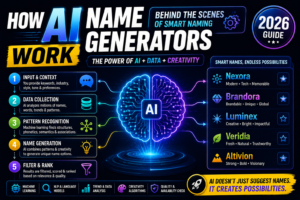
While this guide provides 500+ names, every character is unique. Our D&D name generator creates infinite, lore-appropriate name combinations based on your character’s race, class, gender, and even personality traits. Here’s how to get the most out of it:
Select Your Character’s Race
Choose from all playable races — the generator uses race-specific phonetic patterns and naming conventions drawn from official D&D lore.
Specify Gender and Class (Optional)
Narrow your results by gender identity and character class. Some names feel more appropriate for certain classes — a dwarven wizard might have a different naming flavor than a dwarven barbarian.
Add Personality Keywords
Describe your character’s personality in a few words. “Brooding half-orc paladin seeking redemption.” “Mischievous gnome artificer obsessed with explosions.” The AI uses these cues to generate names that match your character’s vibe.
Generate and Collect Favorites
Generate dozens of options. Save the ones that resonate. Compare them. Say them out loud. Imagine your DM introducing your character with each name.
Common D&D Naming Mistakes to Avoid
Mistake #1: Modern or Pop Culture Reference Names
“Legolas,” “Daenerys,” “Kratos,” “Geralt.” Using existing fantasy character names immediately pulls other players out of the world — and invites constant comparisons. Fix: Use existing names as phonetic inspiration, not direct copies. Like the sound of “Legolas”? Generate elven names with similar phonetic patterns using our D&D name generator.
Mistake #2: Unpronounceable Complexity
“Xy’larithrianix’malathor the Unfathomable.” Your DM will mispronounce it. Other players will call you “X.” The joke will get old. Fix: One or two distinctive elements are enough. “Xylar” is exotic without being impossible. Save the truly baroque names for ancient dragons and forgotten deities.
Mistake #3: Joke Names That Don’t Age Well
“Sir Fartsalot,” “Barry the Barbarian Accountant,” “Drizzt Do’Urden’s Less Successful Brother.” Funny in session zero. Regrettable by session ten. Fix: Humor in character names works best when it’s subtle. “Gimble the Unsurprised” (a gnome who’s seen everything) is funny and characterful. “Fartblaster” is not.
Mistake #4: Names That Don’t Match the Race’s Phonetic Style
A dwarf named “Aelindoriel Moonshadow” sounds elven. An elf named “Thorgrim Battlehammer” sounds dwarven. Phonetic inconsistency confuses other players and undermines the world’s coherence. Fix: Study the phonetic palette for your character’s race. Use the patterns consistently.
Mistake #5: Names That Are Too Similar to Other Party Members
“Gimli” and “Gimble” in the same party. “Aerindor” and “Aerendil.” Similar names cause confusion in combat when split-second decisions matter. Fix: Check your name against other party members’ names. Distinct first letters and syllable counts help everyone at the table.
External Resources for D&D Naming
This D&D character naming guide draws from official sources and community knowledge. For deeper research into D&D naming conventions and lore, explore these external resources:
📚 Official D&D Resources
D&D Player’s Handbook — The primary source for race descriptions, naming conventions, and character creation rules.
Xanathar’s Guide to Everything — Expanded character options including the “This Is Your Life” section with naming tables and backstory generation.
Mordenkainen Presents: Monsters of the Multiverse — Updated race options and expanded lore for 30+ playable races.
🌐 Community & Lore Resources
Forgotten Realms Wiki — Comprehensive lore database for the official D&D setting, including detailed naming conventions for every race and culture.
D&D Beyond — Official digital toolset with character builder, sourcebooks, and community forums.
r/DnD on Reddit — Active community for players and DMs sharing character ideas, naming discussions, and world-building resources.
Frequently Asked Questions About D&D Character Naming
How do I come up with a D&D character name that feels original?
Start with this D&D character naming guide’s phonetic patterns for your chosen race — but don’t just pick from the list. Combine sounds in new ways. Take a prefix from one name and a suffix from another. “Thalorien” (high elf) combines “Thal-” and “-orien.” Blend elements that fit the phonetic palette to create something that sounds authentically elven, dwarvish, or draconic without being a copy of an existing name. Our D&D name generator automates this creative process with AI that understands race-specific linguistic patterns.
Should my character’s name reflect their class or backstory?
It can, but it doesn’t have to. Some of the most memorable D&D characters have names that create interesting contrasts with their identity. A tiefling cleric named “Mercy.” A half-orc wizard named “Quill.” The contrast between name and class can be a rich source of character depth. That said, some players prefer names that telegraph their character’s nature — a dragonborn paladin named “Valor,” a rogue named “Shadow.” Both approaches are valid. Choose what serves your character’s story.
How do I name my character if I’m playing a homebrew race?
For homebrew races, establish the phonetic palette first. What sounds feel right for this race? Are they aquatic? Use flowing sounds. Subterranean? Use harder consonants. Celestial? Use open vowels and soft consonants. Once you’ve defined the phonetic rules, generate names that follow them consistently. The D&D name generator can still help — describe your homebrew race in the prompt and let the AI create names that match your description.
Can I use a name from mythology or history for my D&D character?
Absolutely — and it’s a time-honored D&D tradition. “Thor” is both a Marvel superhero and a D&D deity. Historical names can ground your character in something familiar while the fantasy world around them is fantastical. A human fighter named “Marcus” in a party of elves and dragonborn can feel refreshingly grounded. Just be mindful: heavily recognizable names (“Arthur Pendragon,” “Cleopatra”) may carry baggage that distracts from your original character. Less famous historical or mythological references work better.
How important is it to follow official D&D naming conventions?
It depends on your table and your world. If you’re playing in the Forgotten Realms, following lore conventions helps your character feel authentically part of that world. If you’re in a homebrew setting, your DM may have established different naming conventions — ask them. And if your table prioritizes fun over strict lore adherence, choose whatever name makes you excited to play the character. The most important rule: your name should enhance everyone’s enjoyment, including your own. For more on naming principles across genres, read our complete naming guide.
Your D&D Character Naming Checklist
Study Your Race’s Phonetic Palette
Learn the sounds, prefixes, suffixes, and patterns that define your character’s race. This guide covers the major races; for others, research official D&D sourcebooks or the Forgotten Realms Wiki.
Define Your Character’s Identity
Class, background, personality, alignment. Do you want the name to reflect these elements or create interesting contrast?
Generate 20+ Options
Use our D&D name generator and browse the 500+ names in this guide. Don’t judge yet — collect broadly.
Say Them Out Loud
Imagine your DM introducing your character. Imagine party members shouting your name in combat. Eliminate anything awkward or unpronounceable.
Check Against Your Party
No names that sound too similar to other party members. No names that create confusion at the table.
Live With It for a Day
Say the name to yourself throughout the day. Write it down. Imagine it on a character sheet, a miniature base, a campaign journal. If it still feels right tomorrow, you’ve found your name.
Conclusion: Your Character’s Legend Begins with a Name
Naming a D&D character is the first creative act of every campaign. Before the first roll. Before the first roleplay moment. Before the first critical hit or natural one — there’s the name. It’s the foundation on which every memory, every inside joke, every heroic deed and tragic failure will be built.
This D&D character naming guide has given you the tools: the phonetic patterns, the lore conventions, the 500+ examples, and the generators to create infinite more. But the most important ingredient is you — your creativity, your character concept, your vision for who this hero (or anti-hero) will become.
Take the time to get the name right. Your future self — six months into a campaign, deeply invested in a character the whole table loves — will be glad you did.
🐉 Ready to name your D&D character?
Generate D&D names now → — free, instant, lore-accurate, no account required.
Then explore our 100+ specialized name generators for every fantasy race, class, and character type. Your next legendary character is just a name away.